Leica Laser Level: The Complete 2026 Guide for UK Trade Professionals and DIY Enthusiasts
A practical, experience-driven guide to choosing the right Leica laser level for your project — with honest comparisons against Milwaukee, Bosch, Hilti, Makita, and Huepar alternatives at every price point.
Why Choose a Leica Laser Level in 2026?
The Leica laser level remains the benchmark for accuracy in UK construction and fit-out work. With ±1mm/10m precision across most of their range, Leica consistently outperforms competitors on build quality and long-term reliability. That's not marketing fluff — I've used a Lino L2 on care home renovation projects around Belfast for three years now, and it still holds calibration perfectly.
So why do professionals keep paying the premium? Three reasons: durability, accuracy, and resale value.
Leica Geosystems (part of Hexagon AB) has been manufacturing surveying equipment since 1921. Their laser levels carry IP54 or IP65 dust and water resistance ratings as standard, which matters when you're working on outdoor groundworks or dusty interior demolitions. The British Standards Institution classifies laser levels under BS EN 61326-1 for electromagnetic compatibility — Leica products consistently meet or exceed these requirements.
That said, Leica isn't always the right choice. If you're hanging shelves at home or doing occasional tiling, you don't need to spend £300+. But for daily trade use? They're hard to beat.
Key Advantages of Leica Over Competitors
Battery life is genuinely impressive. The Leica Lino L6G runs for 14 hours on alkaline cells — roughly double what you'll get from similarly priced Bosch units. The self-levelling speed is noticeably faster too. Around 4 seconds versus 6-8 seconds on most competitors.
I've dropped mine off a step ladder twice. Still spot on. Try that with a budget laser spirit level from Screwfix and you'll be recalibrating within the week.
Leica Laser Level Range: 2026 Models and Specifications
Leica's current UK lineup splits into three tiers: the Lino series for interior cross-line work, the Rugby series for rotary laser level applications, and the specialist 3D/multi-line units for complex fit-outs.
| Model | Type | Range (m) | Accuracy | IP Rating | UK Price (2026) |
|---|---|---|---|---|---|
| Leica Lino L2 | Cross-line | 25m (80m with detector) | ±1mm/5m | IP54 | £189–£220 |
| Leica Lino L2G | Cross-line (green) | 35m (80m with detector) | ±1mm/7m | IP54 | £260–£310 |
| Leica Lino L6G | 360° multi-line (green) | 35m (70m with detector) | ±1mm/10m | IP54 | £520–£580 |
| Leica Rugby 640 | Rotating laser level | 600m (with detector) | ±1.5mm/30m | IP67 | £1,150–£1,350 |
| Leica Rugby 810 | Rotating (dual grade) | 800m (with detector) | ±1.5mm/30m | IP67 | £2,200–£2,500 |
Green vs Red Beam: Does It Actually Matter?
Yes. Massively. Green beams are 4x more visible to the human eye than red. If you're working in bright conditions — conservatories, outdoor patios, rooms with large windows — green is worth the extra £60-80. I switched to green about 18 months ago and honestly wouldn't go back.
The trade-off? Green diodes consume more battery. Expect roughly 30% less runtime compared to red equivalents.
Leica vs Milwaukee vs Bosch vs Hilti: Which Laser Level Wins?
The Milwaukee laser level range has gained serious ground since 2024. Their M12 platform integration means you can share batteries across your entire Milwaukee kit — brilliant if you're already invested in that ecosystem. But accuracy-wise, Leica still edges ahead.
| Feature | Leica Lino L6G | Milwaukee M12 CLLP | Bosch GLL 3-80 CG | Hilti PM 30-MG |
|---|---|---|---|---|
| Accuracy | ±1mm/10m | ±2mm/10m | ±1.5mm/10m | ±1.5mm/10m |
| 360° Lines | 3 x 360° | 1 vertical + 1 horizontal | 3 x 360° | 3 x 360° |
| Working Range | 35m | 30m | 30m | 30m |
| Battery Life | 14 hours | 20+ hours (M12) | 4 hours | 20 hours |
| Weight | 1.1kg | 0.9kg | 0.78kg | 1.0kg |
| UK Price | £550 | £380 | £450 | £520 |
The Hilti Question
Hilti laser levels are exceptional — no argument there. But their fleet management model means you're often leasing rather than owning, and their pricing reflects the premium service package. For a sole trader or small firm, a Leica or DeWalt laser level typically offers better value.
Bosch: The Middle Ground
The Bosch laser level range — particularly the GLL 3-80 CG — sits in an interesting spot. Decent accuracy, good app connectivity via Bluetooth, and widely available at most trade counters. My mate who does kitchen fitting swears by his Bosch GCL 2-50. For that mid-range £200-£450 bracket, they're solid.
Worth the extra spend for Leica? If you need sub-millimetre precision daily, absolutely. For weekend warriors? Probably not., a favourite among Britain’s tradespeople
Budget Alternatives: Huepar, Screwfix, and Toolstation Options
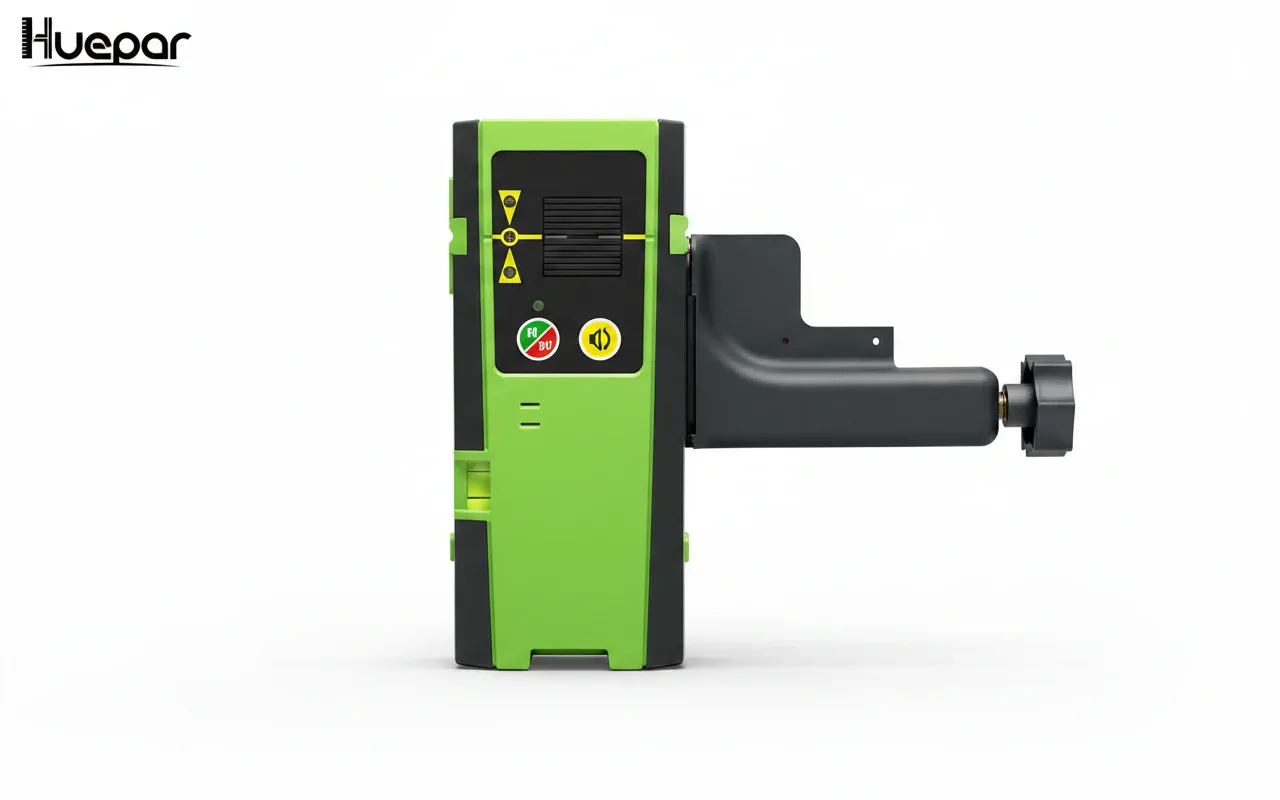
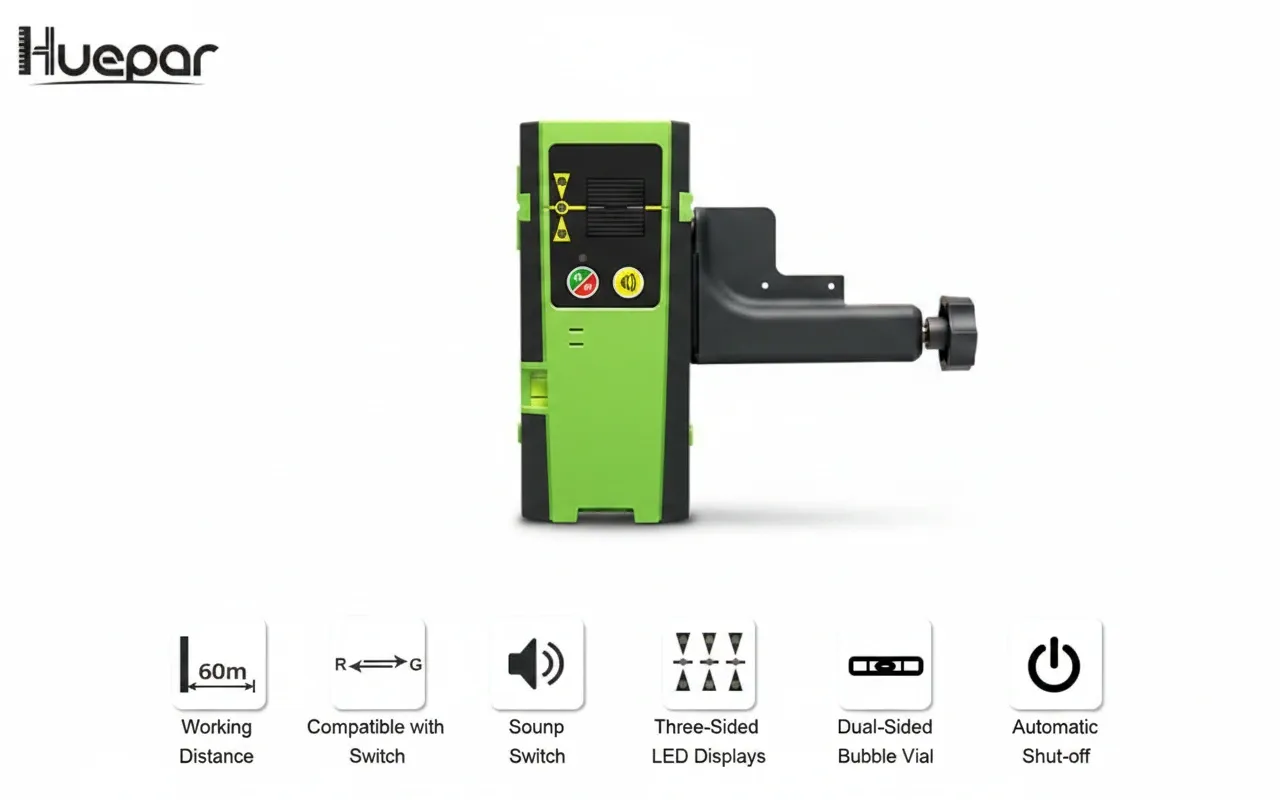
Not everyone needs a £500 levelling laser. The Huepar laser level range has genuinely disrupted the budget end of the market this spring, offering 360 laser level functionality at a fraction of the Leica price. The Huepar dual-colour receiver at £49.99 extends pulse-mode working range up to 60m — that's remarkable value for money.
A laser level from Screwfix will typically run you £40-£180 depending on features. Toolstation carries similar stock. Both are convenient for same-day collection, which matters when you've got a job to finish.
When Budget Makes Sense
Look, I know the price seems steep for Leica. But here's the thing — if you're doing occasional DIY, a £60-80 Huepar cross-line laser will serve you perfectly well. I used one for months before upgrading. The accuracy at ±3mm/10m won't matter for hanging pictures or fitting skirting boards.
Where budget units fall short: outdoor range, build quality over time, and self-levelling reliability after drops. The Makita laser level SK105DZ sits nicely between budget and premium at around £130 — decent for occasional trade use. (Worth checking Toolstation's current stock on that one; it sells out faster than you'd expect.)
Toolstation vs Screwfix: Stock Differences
In my experience around Belfast, Screwfix carries more branded options (DeWalt, Bosch Professional), while Toolstation stocks more own-brand and budget alternatives. Both offer click-and-collect. For a laser level with tripod included, Toolstation often bundles better deals — check their combo kits before buying separately.
Laser Level Tripods and Essential Accessories
A laser leveler with tripod is non-negotiable for any serious work. Without stable mounting, even a £2,000 rotating laser level becomes unreliable. The tripod matters almost as much as the laser itself.
Tripod Selection Guide
For interior cross-line work, a lightweight aluminium tripod (1.2-1.8m adjustable) costs £25-£60 and does the job. For rotary laser level use outdoors, you'll want a heavy-duty contractor tripod — flat-head style, rated for the unit's weight plus wind resistance.
Leica's own CLR290 tripod runs about £85. Honestly? A generic 5/8" thread tripod at £35 works identically for most applications. Save the money for a decent detector instead.
Tripod compatibility note: Most laser levels use a standard 5/8" x 11 UNC thread. Leica, Bosch, and Hilti all use this standard. Some compact units (particularly Huepar and budget brands) use 1/4" camera threads — always check before purchasing a level laser with tripod separately.
Receivers and Detectors
Working outdoors or in bright sunlight? You need a receiver. The Huepar dual-colour receiver at £49.99 is compatible with most pulse-mode lasers and extends range to 60m with high accuracy. Leica's own RGR 200 receiver costs £180+ for similar functionality — a significant saving if your laser supports pulse mode.
The Health and Safety Executive classifies most construction laser levels as Class 2 — safe for incidental eye exposure, but you should still avoid staring directly into the beam. Mention it at site inductions; it comes up more than you'd think.
How to Pick the Right Laser Level for Your Job
The best laser level depends entirely on what you're doing. Sounds obvious, but I see people overspending constantly. A tiler doesn't need a rotary laser level. A groundworker doesn't need a 360 laser level with Bluetooth connectivity.
Match the Tool to the Task
Interior fit-out (kitchens, bathrooms, shelving): Cross-line laser, green beam preferred. Budget: £80-£300. The Leica Lino L2G or Bosch GCL 2-50 CG are both excellent choices., popular across England
Groundworks and drainage: Rotating laser level with detector. Budget: £400-£1,500. Leica Rugby 640 or Topcon RL-H5A.
General DIY and home improvement: Basic cross-line, red or green. Budget: £40-£120. Huepar or Makita laser level units offer brilliant bang for your buck here.
Commercial multi-trade coordination: 360° multi-line with remote connectivity. Budget: £400-£600. Leica Lino L6G or Hilti PM 30-MG.
What About Patio and Outdoor Levelling?
This comes up a lot. I recently helped a neighbour extend his concrete patio — the existing slab was level with the patio door (no step down), which created issues with the weep screed and damp course. We used a rotary laser level to establish the correct fall gradient: 1:60 minimum away from the building, as per Building Regulations Approved Document C.
For that kind of work, a basic cross-line won't cut it. You need either a rotating laser level or a long-range line laser with a detector. Well, actually — a decent spirit level and a straight edge would work for small areas under 3m. But anything larger and you're saving hours with a proper laser setup.
Frequently Asked Questions
Is a Leica laser level worth the premium price over Bosch or Milwaukee?
For daily professional use, yes. Leica offers ±1mm/10m accuracy versus ±1.5-2mm/10m from competitors. The build quality means fewer recalibrations over time. For occasional DIY use, though, a Bosch or Huepar unit at £80-£300 delivers perfectly adequate results without the £500+ investment.
What's the difference between a rotary laser level and a 360 laser level?
A 360 laser level projects a continuous visible line around the room using multiple diodes. A rotary laser level spins a single beam rapidly to create a reference plane — visible only with a detector outdoors. Rotary units reach 600-800m range; 360° line lasers max out at 30-35m. Choose rotary for groundworks, 360° for interior fit-out.
Can I use a laser level tripod from a different brand with my Leica?
Yes, in most cases. Leica laser levels use the industry-standard 5/8" x 11 UNC thread mount. Any tripod with this thread — including generic £30-40 options from Screwfix or Toolstation — will work perfectly. Check your specific model's thread size before purchasing, as some compact units use 1/4" camera threads instead.
How often should a laser level be calibrated?
Manufacturers recommend annual calibration for professional use. Leica offers calibration services through authorised UK dealers, typically costing £40-£80. If you drop your unit or notice inconsistent readings, get it checked immediately. Budget lasers may need more frequent calibration — every 6 months under heavy use.
What's the best laser level for tiling in 2026?
For tiling, you need a cross-line laser with good close-range visibility. The Bosch GCL 2-50 CG (£200) or Leica Lino L2G (£260) are top picks. Green beam is essential in bathrooms with artificial lighting. Self-levelling within ±4° ensures your lines stay true even on slightly uneven floors. A wall-mount bracket is more useful than a tripod for tile work.
Are cheap laser levels from Toolstation any good?
Budget laser levels (£30-£80) from Toolstation work fine for basic DIY — hanging pictures, fitting shelves, simple tiling. Expect ±3mm/10m accuracy and shorter battery life. They won't survive drops well and may drift after 6-12 months. For anything structural or where precision matters, invest in a mid-range unit minimum. The Huepar range offers a good middle ground.
Key Takeaways
- Leica laser levels offer ±1mm/10m accuracy — the tightest tolerance available in their price bracket for UK trade professionals in 2026.
- Green beam visibility is 4x better than red — worth the £60-80 premium for any work in bright conditions or large spaces.
- Budget alternatives from Huepar start at £49.99 for accessories like dual-colour receivers, with full cross-line units from £60-£120 offering solid DIY performance.
- Tripod thread compatibility is standardised — most professional laser levels use 5/8" UNC threads, so you don't need brand-specific tripods.
- Rotary laser levels suit outdoor/groundwork (600m+ range with detector), while 360° line lasers are designed for interior fit-out (30-35m range).
- Annual calibration is essential for professional accuracy — budget £40-£80 per year through authorised UK service centres.
- Milwaukee's M12 platform offers the best battery life (20+ hours) if you're already invested in their cordless ecosystem, though accuracy trails Leica by approximately 1mm/10m.
Ready to upgrade your site layout with {brand_name}?
Get Yours Now — £58.18